
 HMK 1, the Blue Gumdrop Nebula
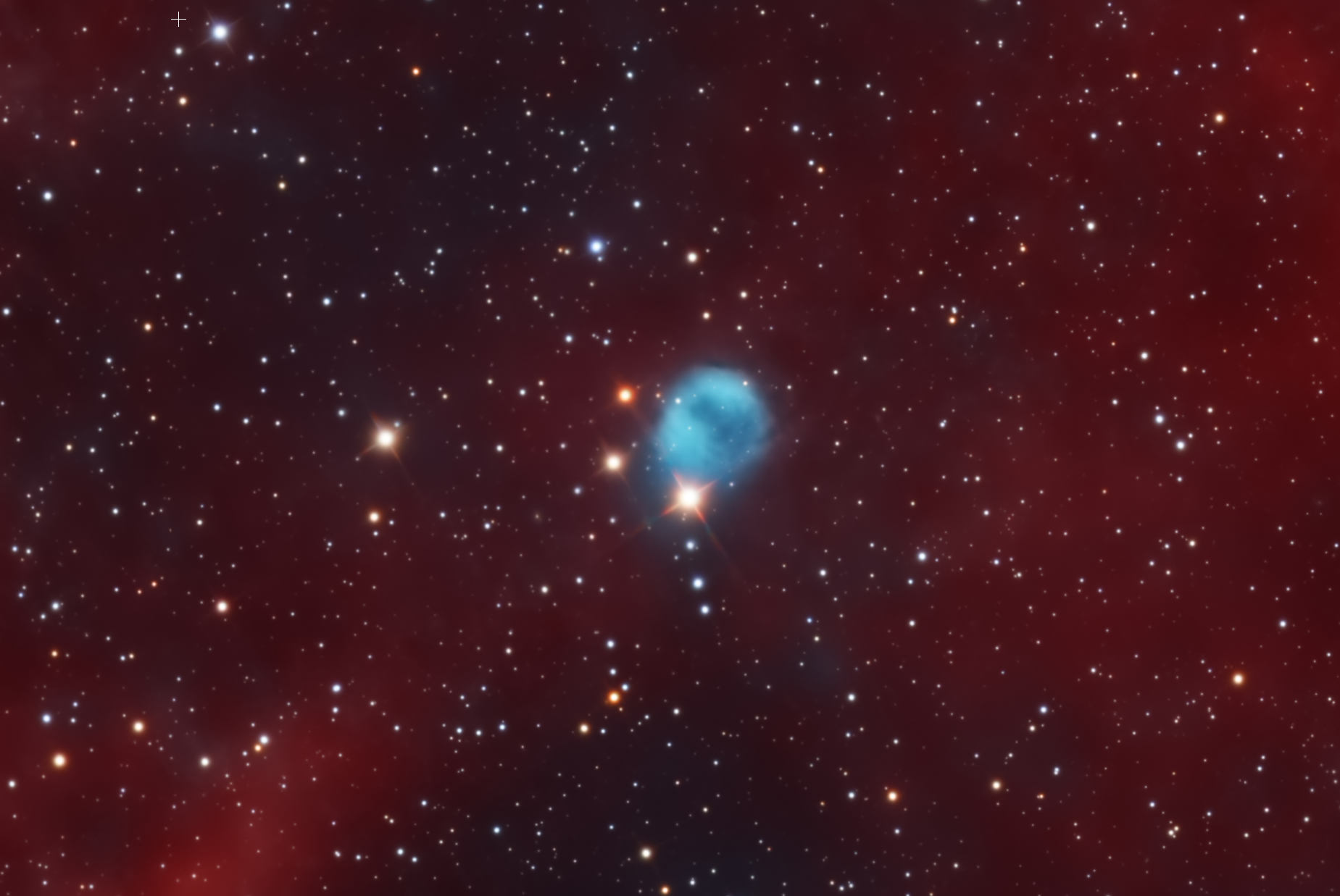
The discovery of HMK 1, also known as the “Blue Gumdrop Nebula,” began with an unexpected OIII signal during a deep-sky imaging project targeting the faint planetary nebula AMU 1. QHYCCD miniCAM8M played an important role in capturing the nebula’s delicate structure.
An Unexpected Discovery During an AMU 1 Imaging Project
Astrophotographer Hunter Outten and his collaborators, Kaleb Jordan and Michael Ales, were originally working on an extensive imaging project targeting AMU 1 (PN G075.9+11.6), a faint and unusual bipolar planetary nebula in the constellation Cygnus.
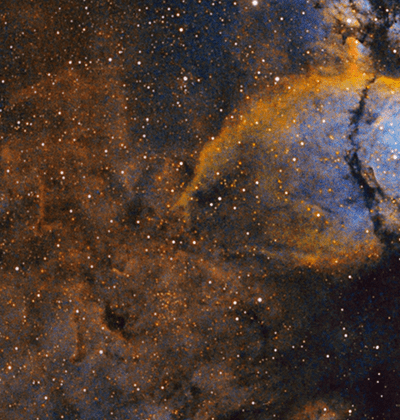
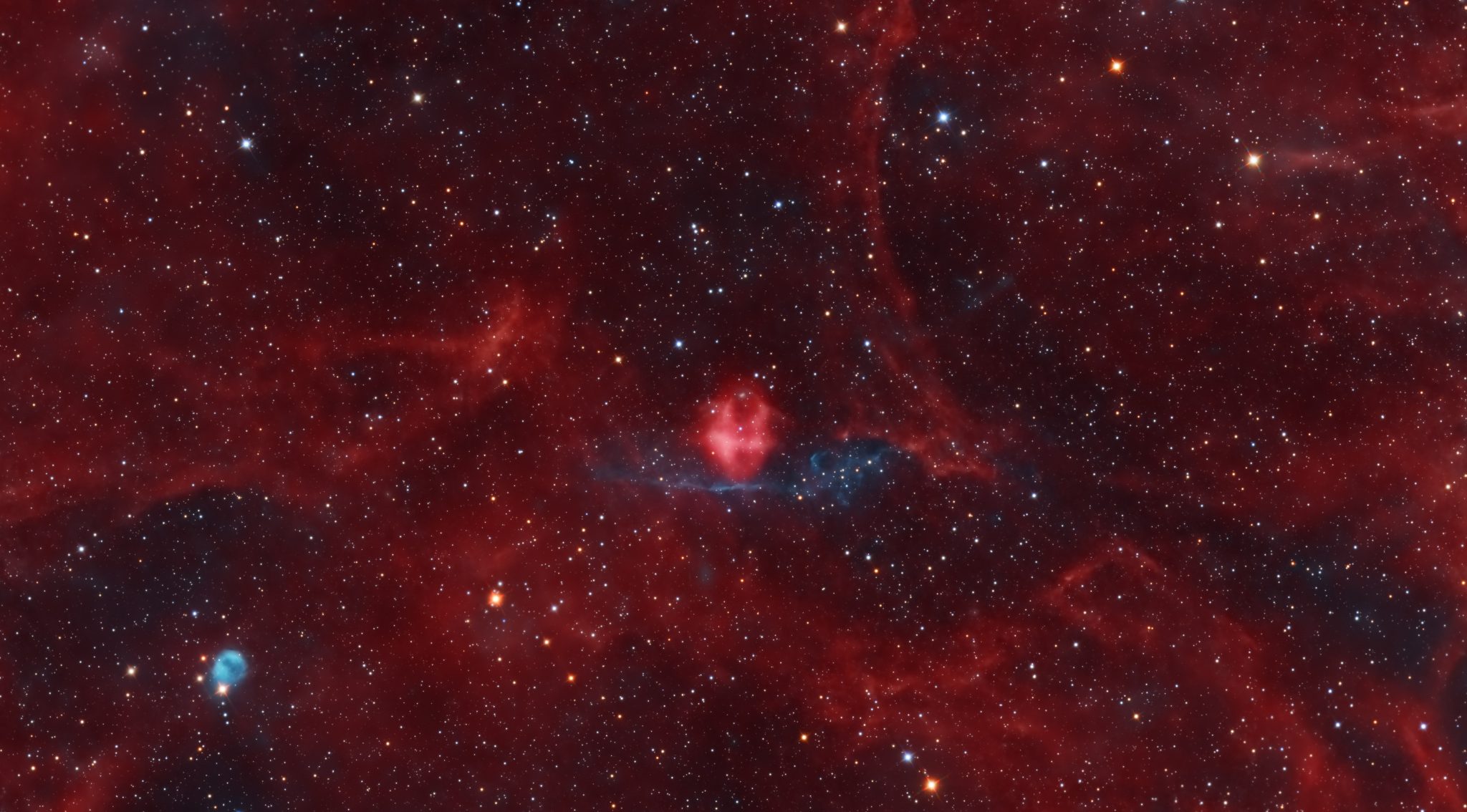 AMU1 with the new planetary nebula HMK1
During the project, the team noticed a faint, bulb-shaped structure near an asterism of stars in the OIII data captured with his Sky-Watcher Quattro 150P. Initially, they suspected it might be an imaging artifact or light from a nearby bright star. However, as more exposure time was accumulated, the structure became increasingly apparent in the OIII wavelength.
A closer examination revealed a particularly intriguing detail: a white dwarf candidate, Gaia DR3 2126285510495697920, was located near the center of the structure. This prompted the team to investigate further.
After checking astronomical databases and consulting astrophysicists Dylan Hilligos and Dr. Jason Speights, the team found that the object had not previously been documented as a planetary nebula. Additional observations and analysis helped establish its nature, and Pascal from PlanetaryNebulae.net assisted with the confirmation and documentation process.
The newly documented planetary nebula was designated HMK 1, also known as the Blue Gumdrop Nebula.
The discovery demonstrates how patient observation and detailed analysis can turn an unexpected feature in an astrophotography image into a new astronomical finding.
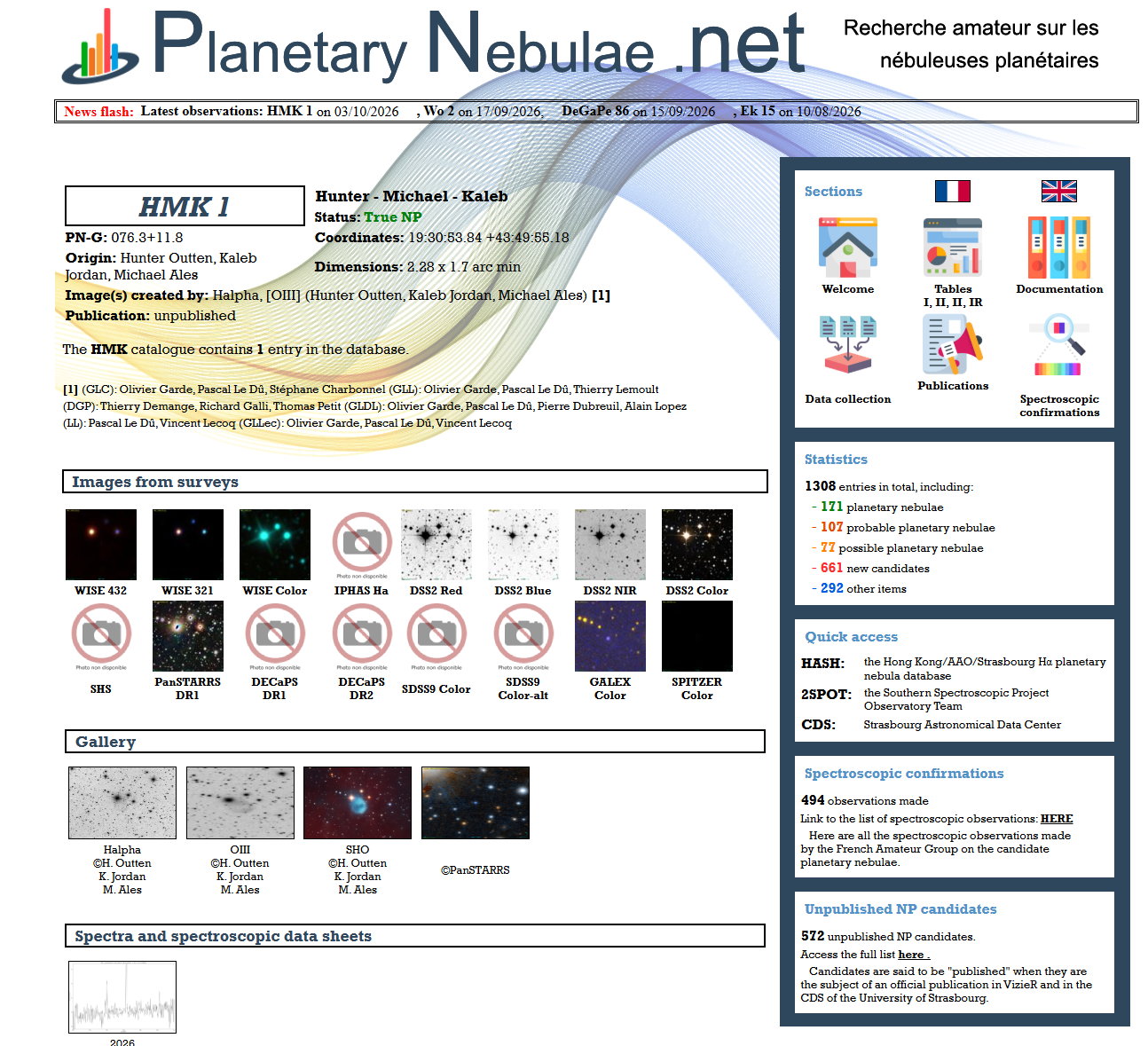 HMK 1 Documented in the PlanetaryNebulae.net Catalog
Revealing Faint Structures with QHYCCD miniCAM8M
As the project developed, Hunter Outten used the QHYCCD miniCAM8M with an Apertura CarbonStar 200 imaging Newtonian to collect additional narrowband data for HMK 1.
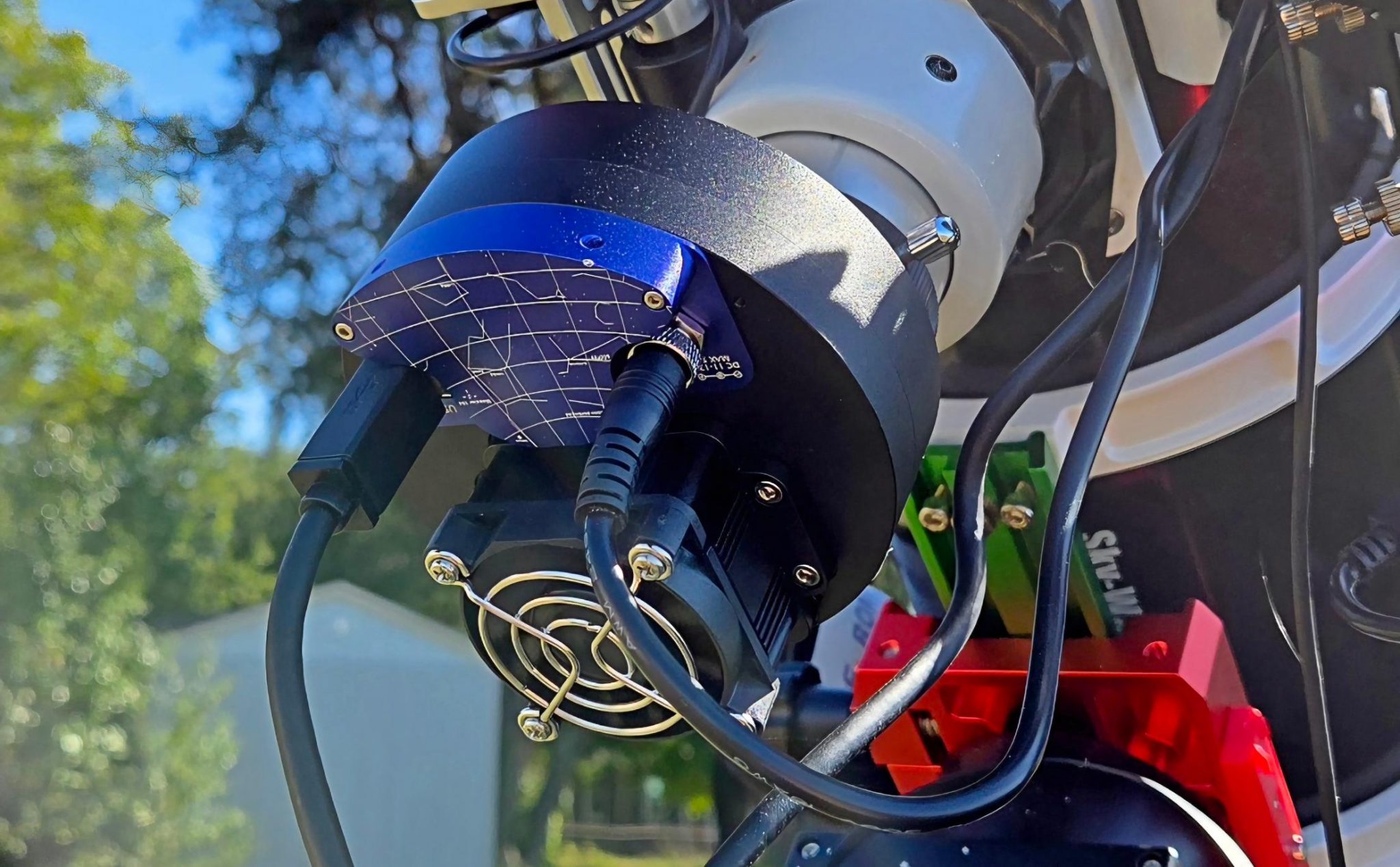 QHYCCD miniCAM8
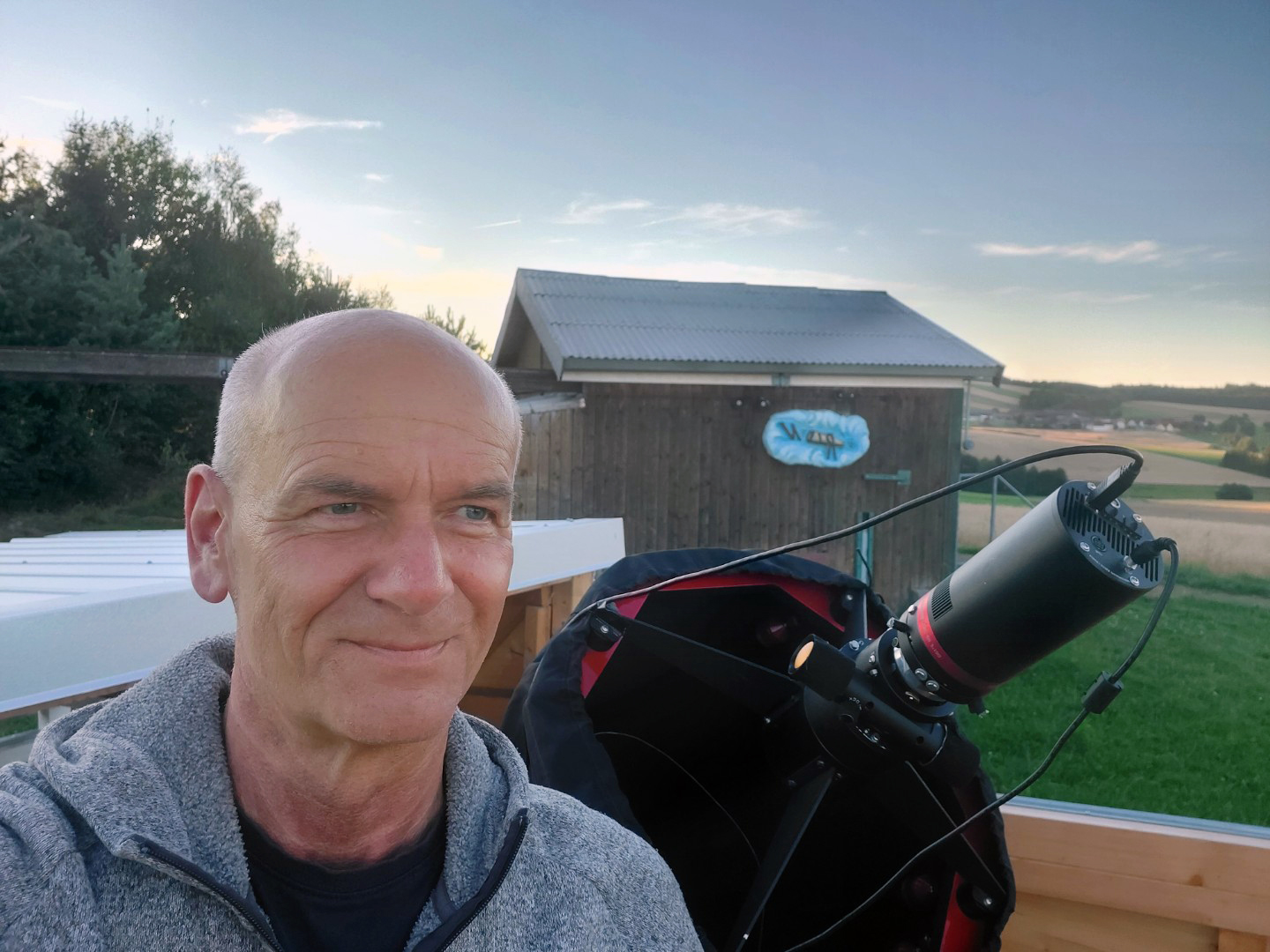
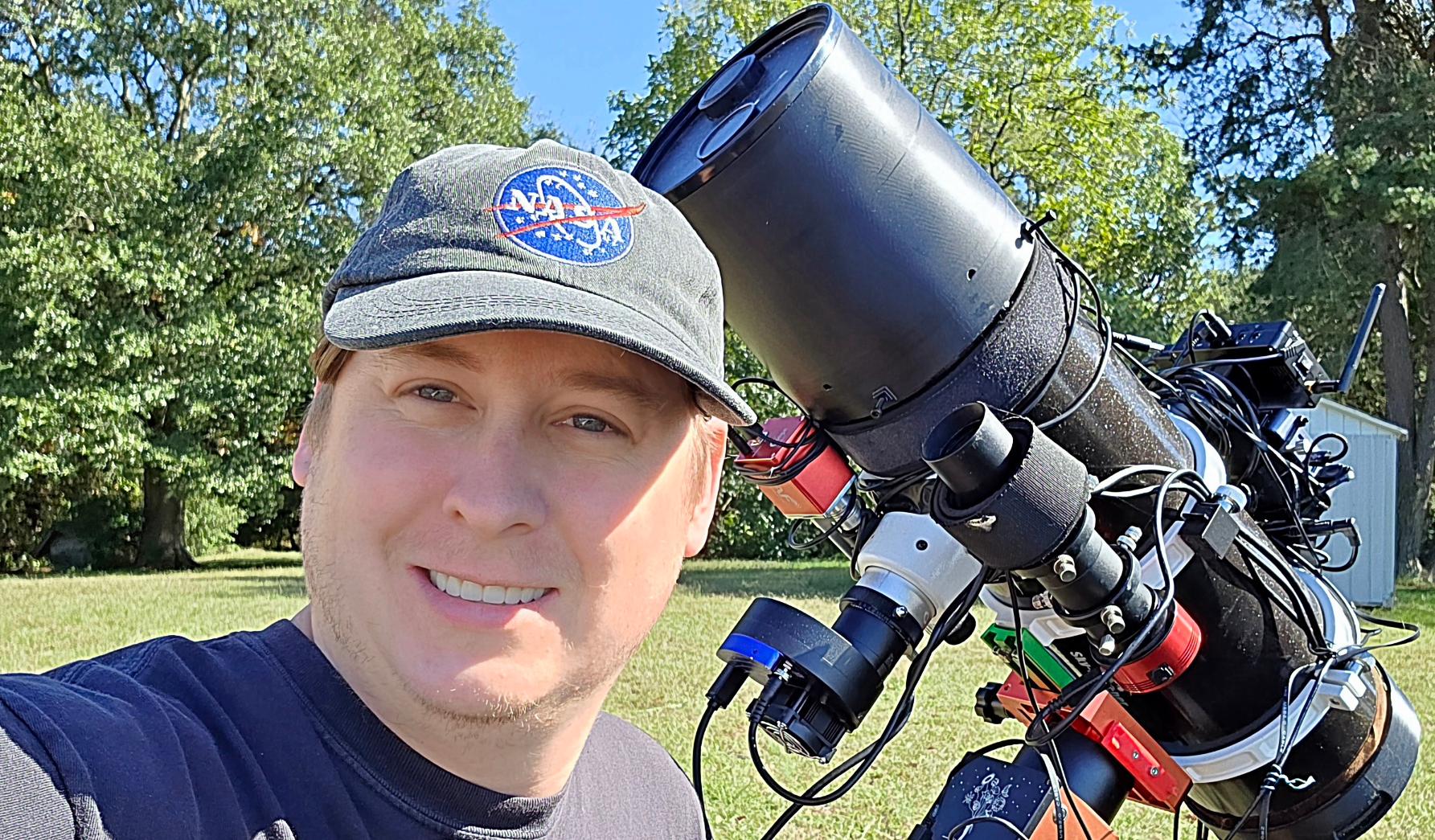 Hunter Outten and his setup
The camera was used primarily with 7nm Hα and OIII filters, allowing the team to investigate the nebula’s emission structures in two important wavelengths.
The miniCAM8M data included:
Hα: 119 exposures × 240 seconds, totaling 7 hours and 56 minutes.
OIII: 247 exposures × 240 seconds, totaling 16 hours and 28 minutes.
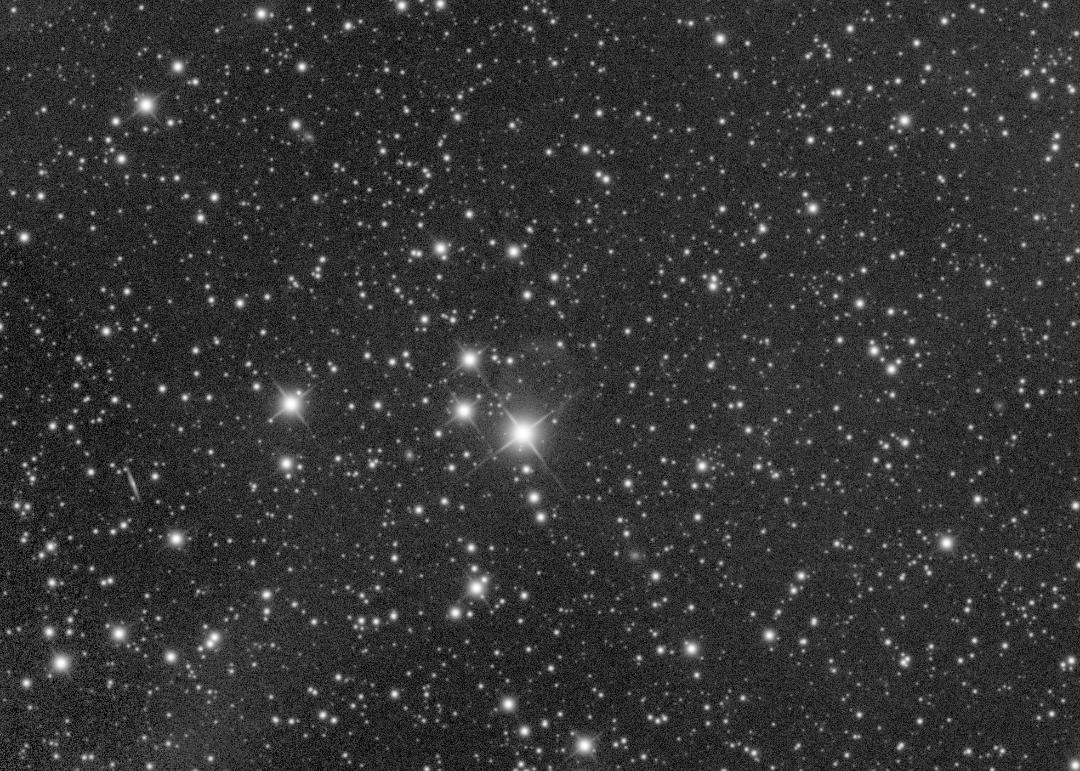 Ha Image captured with the miniCAM8
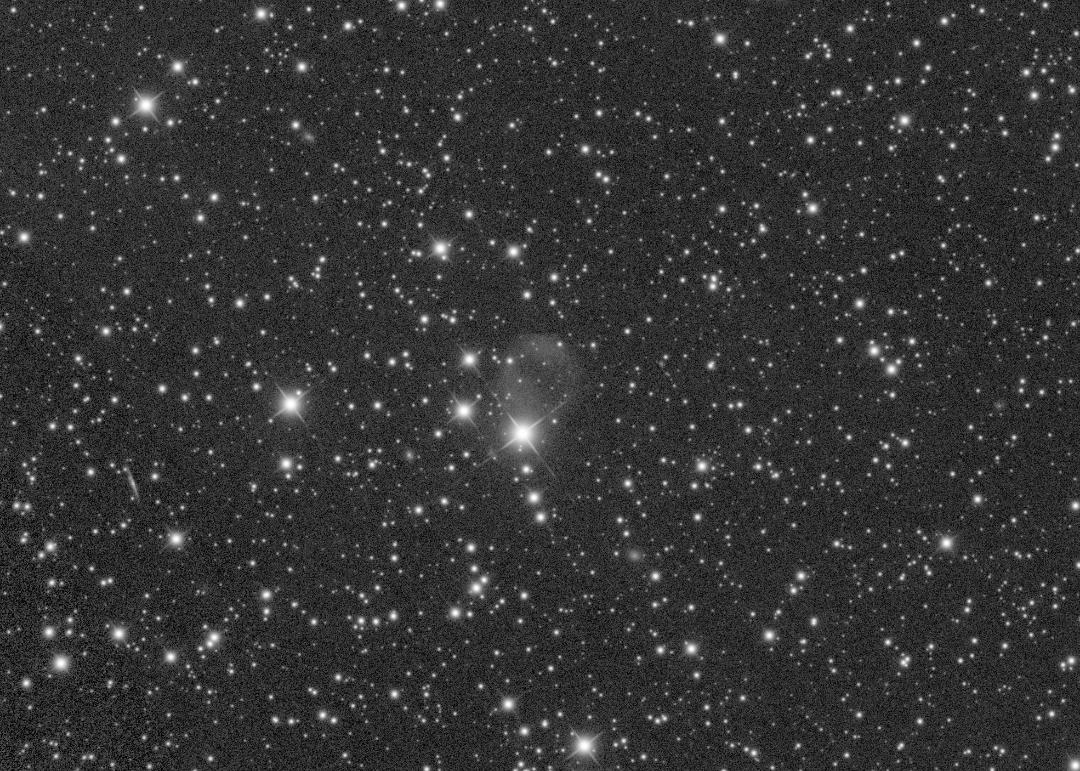 Oiii image captured with the miniCAM8
Together, these observations provided approximately 24 hours and 24 minutes of integration time with the miniCAM8M.
The OIII data were particularly valuable in revealing the faint, asymmetric structure surrounding the white dwarf candidate. By combining these observations with data collected using other cameras, telescopes, and filters, the team was able to investigate the nebula in greater detail.
A Collaborative Imaging Project Spanning Multiple Systems
The HMK 1 discovery formed part of a much larger imaging project centered on AMU 1. Hunter and his collaborators used several imaging systems, including the Apertura CarbonStar 200, Celestron EdgeHD 11, Sky-Watcher Quattro 150P, and William Optics Ultra-Cat 108.
Multiple cameras and filter sets contributed to the final dataset, including the QHYCCD miniCAM8M and other astronomical imaging cameras. The team also combined narrowband Hα and OIII observations with RGB data.
According to the published project details, the complete dataset accumulated approximately 219 hours and 9 minutes of integration time, including about 69 hours of Hα and 147 hours of OIII data.
This extensive integration, together with observations from multiple systems and subsequent analysis, helped reveal the faint structures of AMU 1 while bringing the previously undocumented HMK 1 to light.
From an Imaging Anomaly to a New Astronomical Object
The story of HMK 1 highlights the scientific potential of deep-sky imaging. What initially appeared to be a faint, uncertain feature in an OIII image became the subject of further investigation, database checks, expert consultation, and additional observations.
For QHYCCD, the project also demonstrates how the miniCAM8M can contribute to demanding narrowband imaging work. Its use in collecting Hα and OIII data helped document a faint planetary nebula whose structure might otherwise have remained unnoticed.
Congratulations to Hunter Outten, Kaleb Jordan, and Michael Ales on this exciting achievement! We are delighted to see the QHYCCD miniCAM8M contributing to the exploration and documentation of the universe.
HMK 1 catalog entry: https://planetarynebulae.net/FR/page_np.php?id=1307
View the HMK 1 image: https://app.astrobin.com/i/vdlm0f
Watch the project video: https://youtu.be/zS4pPUp08tM